

Make Time Bigger
How a day can be much more than a day.

Dear Reader,
When you have the luxury of time’s abundance, you get away with being highly inconsistent about the whole business of wasting time versus putting it to good use.
As I wait for 10 very busy people to test something I’m building, thirsty for their feedback, impatience and patience ebb and flow.
I sit. I make the walls disappear.
Everything can be bigger out here, including time.
Back in Lonesome Dove, a day was just a day.
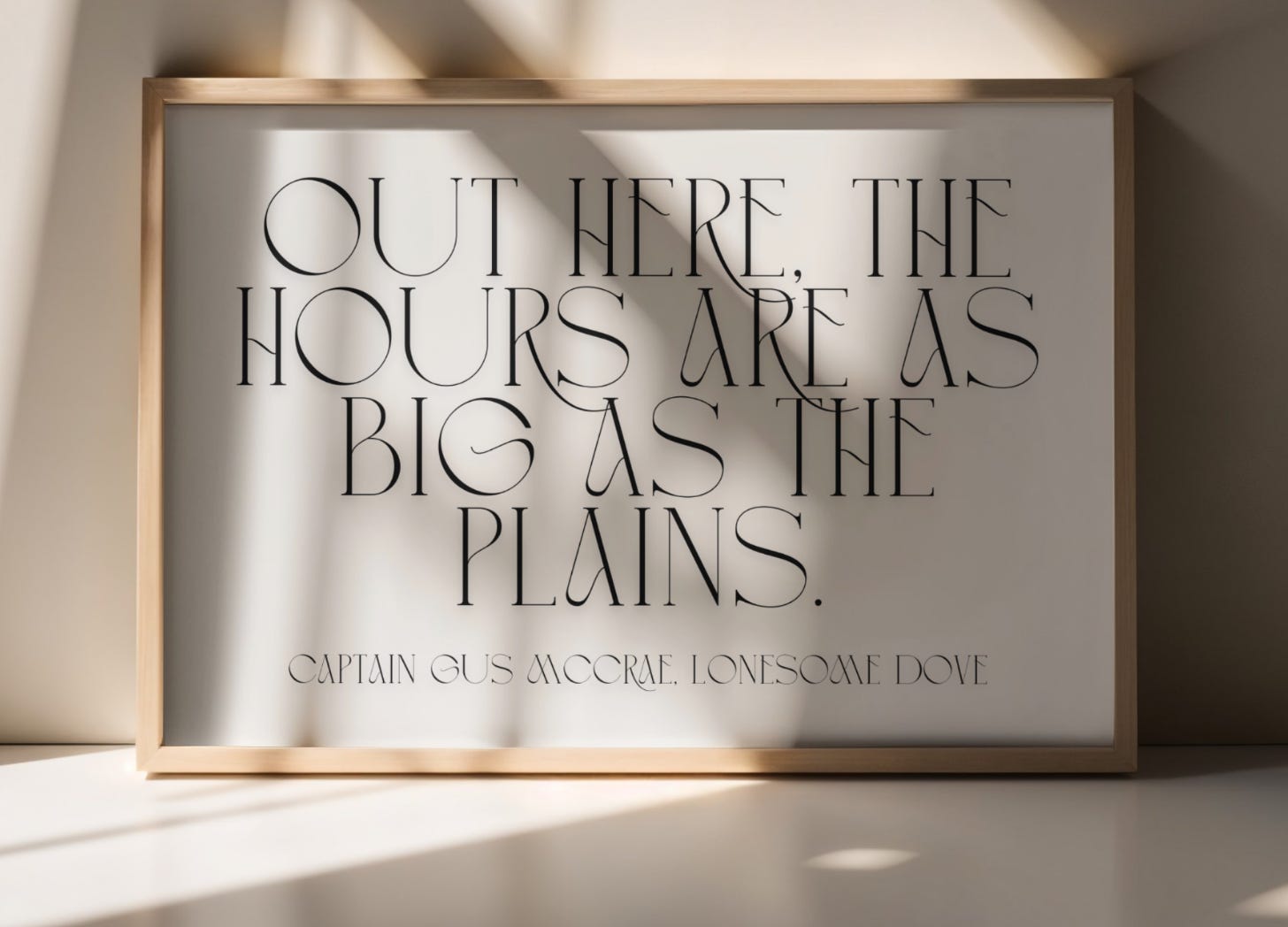
"It’s a big country, Newt," Augustus said. "It’s a big country and we’re just a little part of it. The time is big, too... back in Lonesome Dove, we was just pestering the hours. Out here, the hours are as big as the plains."
— Augustus McCrae, Lonesome Dove, Chapter 3
You can touch time in Larry McMurtry’s Lonesome Dove, the most beautiful collection of words ever put on the canvas of a Western adventure, over open spaces and abundant time. A story about aging, friendships, the promise and the danger of what’s over that hill, it’s the type of writing that knocks your breath out. The type of writing that wins Pulitzers.
I must tell you about Lonesome Dove, dear reader, because just a month ago I asked you to give me some of your time to read and think about Ayn Rand’s philosophy of purpose. I almost wish I hadn’t: there is more wisdom in the one-line witticisms of Gus McCrae, one of the novel’s two main characters, than in many of the 60-page sermons Rand’s characters deliver.
Gus-isms: Posters to Redecorate Your Mind
A quick search shows there is a market for posters of Ayn Rand quotes and, unfortunately, no market for Lonesome Dove quotes.
Let’s change that.
Lonesome Dove takes place in the late 1800s. America is vast, unruly, and unsettled in all her ways. There are Indians, Mexicans, whores, thieves, and cowboys aplenty.
There are two main characters: Captain Gus McCrae, who prefers to watch the sunsets from his dusty porch while holding a whiskey jug, and Captain Woodrow Call, who sets Lonesome Dove’s plot in motion when he decides to take a herd of cattle and horses from Mexico into Montana.
Cap. Call is the brain of the story. Gus is the heart.
Call’s decision to drive cattle to Montana is based on the word of one person who may or may not have been there. Gus reluctantly joins the trek, even if he admits in the end, “I wouldn’t have missed it for anything. It’s a fine world, though few live to see it.”
Living to see the world versus living to accomplish in the world are two forces always in conflict in Lonesome Dove.
While Call suffers forward, shrinking time, Gus expands it by wandering forward in the present — caring for the women, the conversation, the pigs, the view, and what's over the next hill.
Posters stuck on my wall — making time bigger for me.

A blip, or a blink, and we're gone. The sense of security we've come to expect doesn't serve us. We're all walking on shaky ground right now.

Wanting is fine. Doing the work to get what you want is necessary. Enjoying the process is indispensable. And when the work itself isn't enjoyable, the feisty 10-cent novel waiting for you at the end of the day makes all the difference.
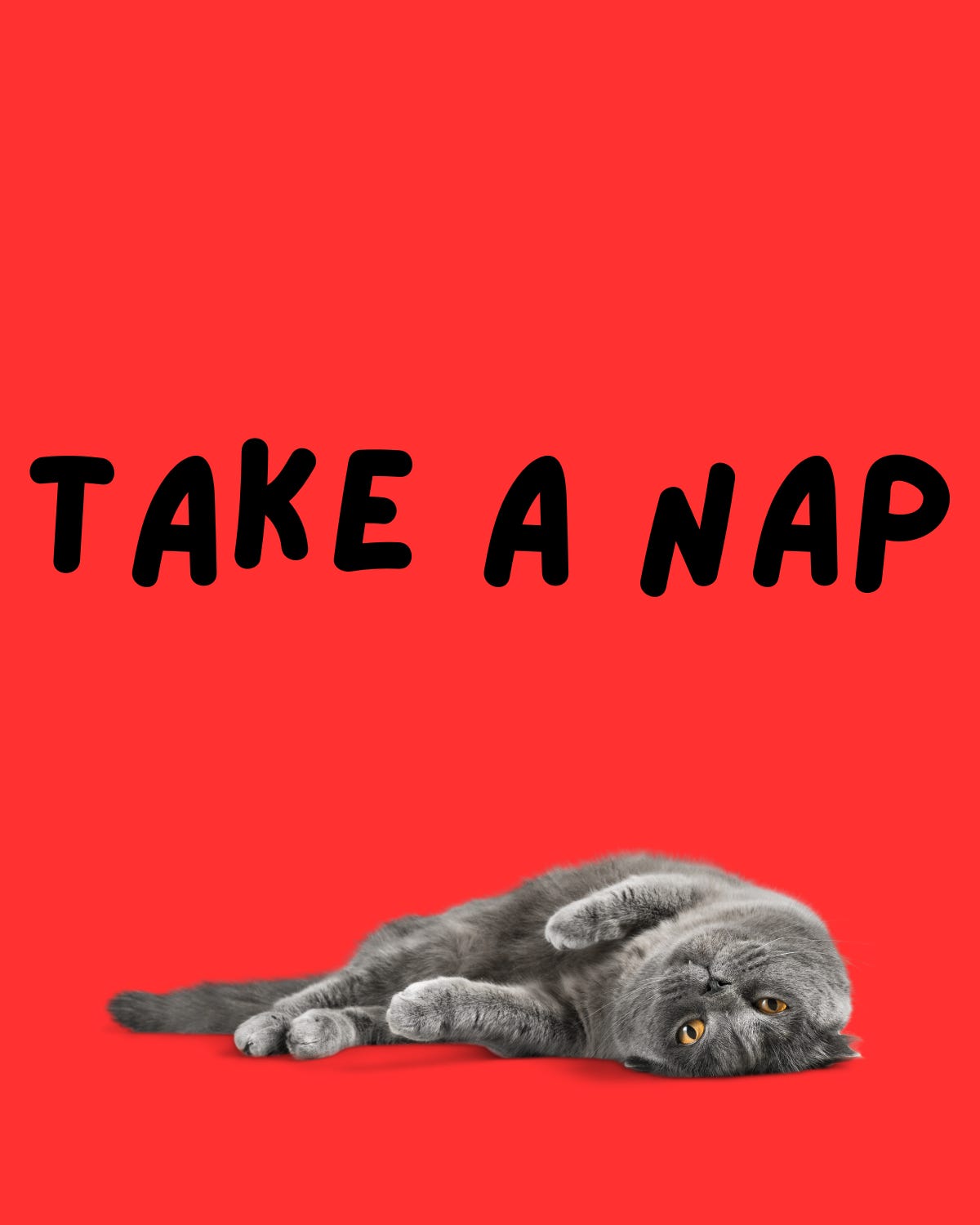
Far from an endorsement of laziness, this line is a dead-on indictment of the all-work-no-fun culture where I spent decades not taking enough naps.
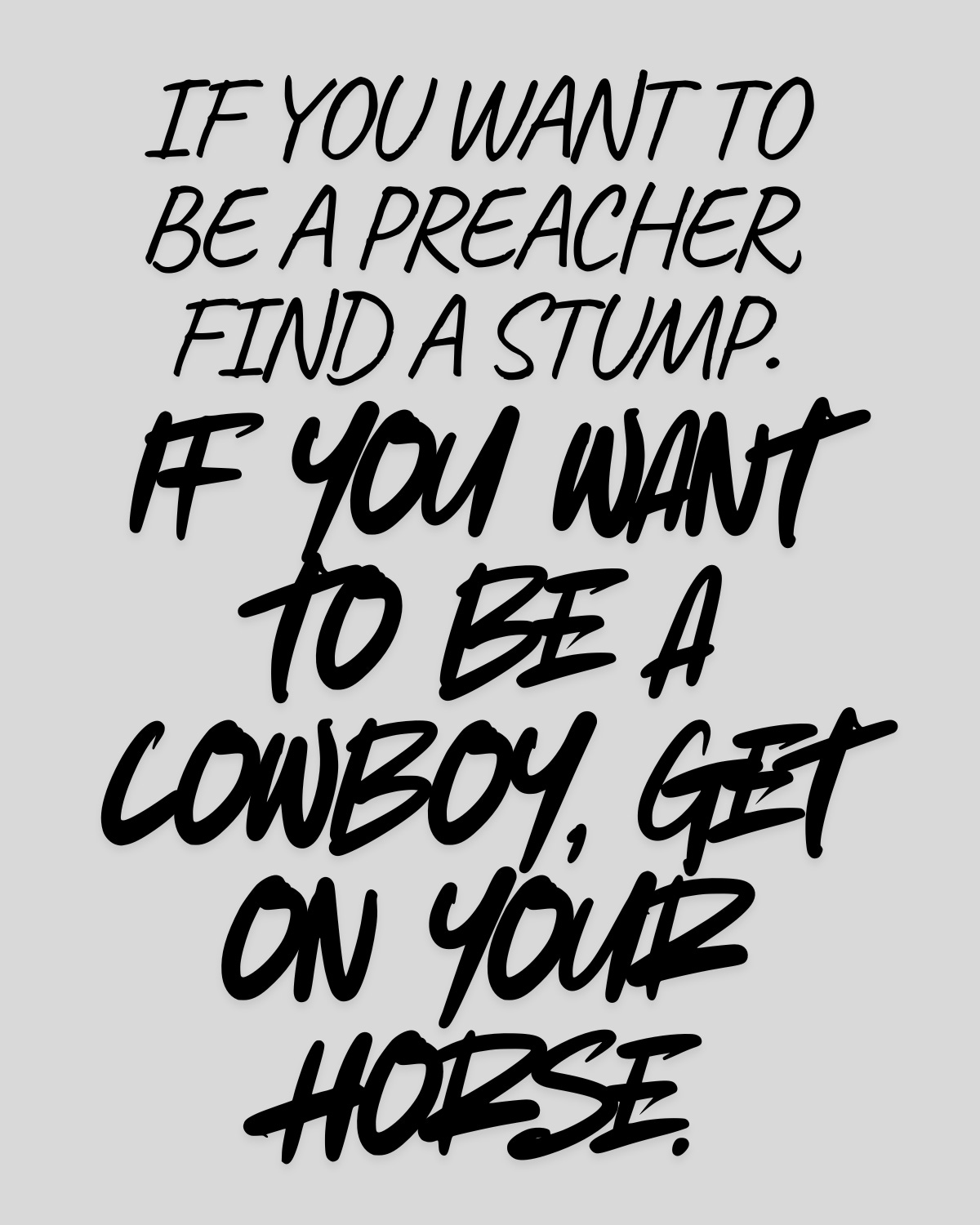
After losing your work identity, discovering what comes next requires doing more than talking. I can only call myself a writer if I write, or a founder if I put a stake in the ground.
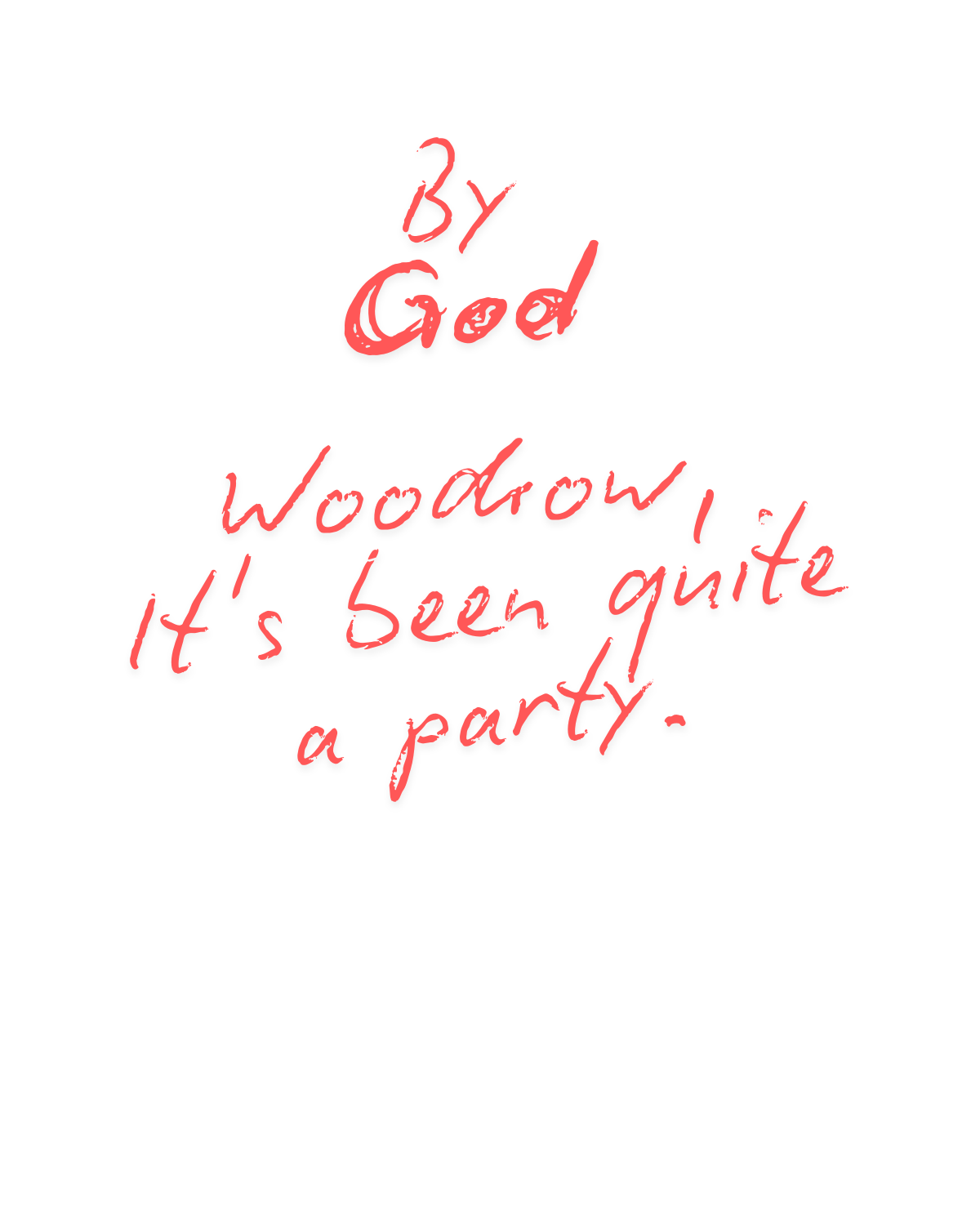
A spat with Indians leaves Gus with one leg. For him to survive, the second leg also needs to be removed. He refuses and threatens to shoot anyone who tries to force him. Though we lose Gus, he remains a narrative driver through the end, undiminished. This poster is the one I hope to remember and parrot when I'm ready to go, because life was a party, and I had enough sense to know it while it was happening.
I agree, a very good post! Parabens, irma.
You hooked me, Flavia. I will go get the book and read it. We shall talk about it later. Loved the post!